Mat[t]er Refusae (2025) is a series of seven digital photographic composites and a work of feminist self-portraiture. The Latin title is a conflation. Mater (mother) and materia (matter/material) speak to new materialist discourse; refusae, the refused, the rejected, names the work’s central provocation: what happens to women when they age beyond cultural usefulness?
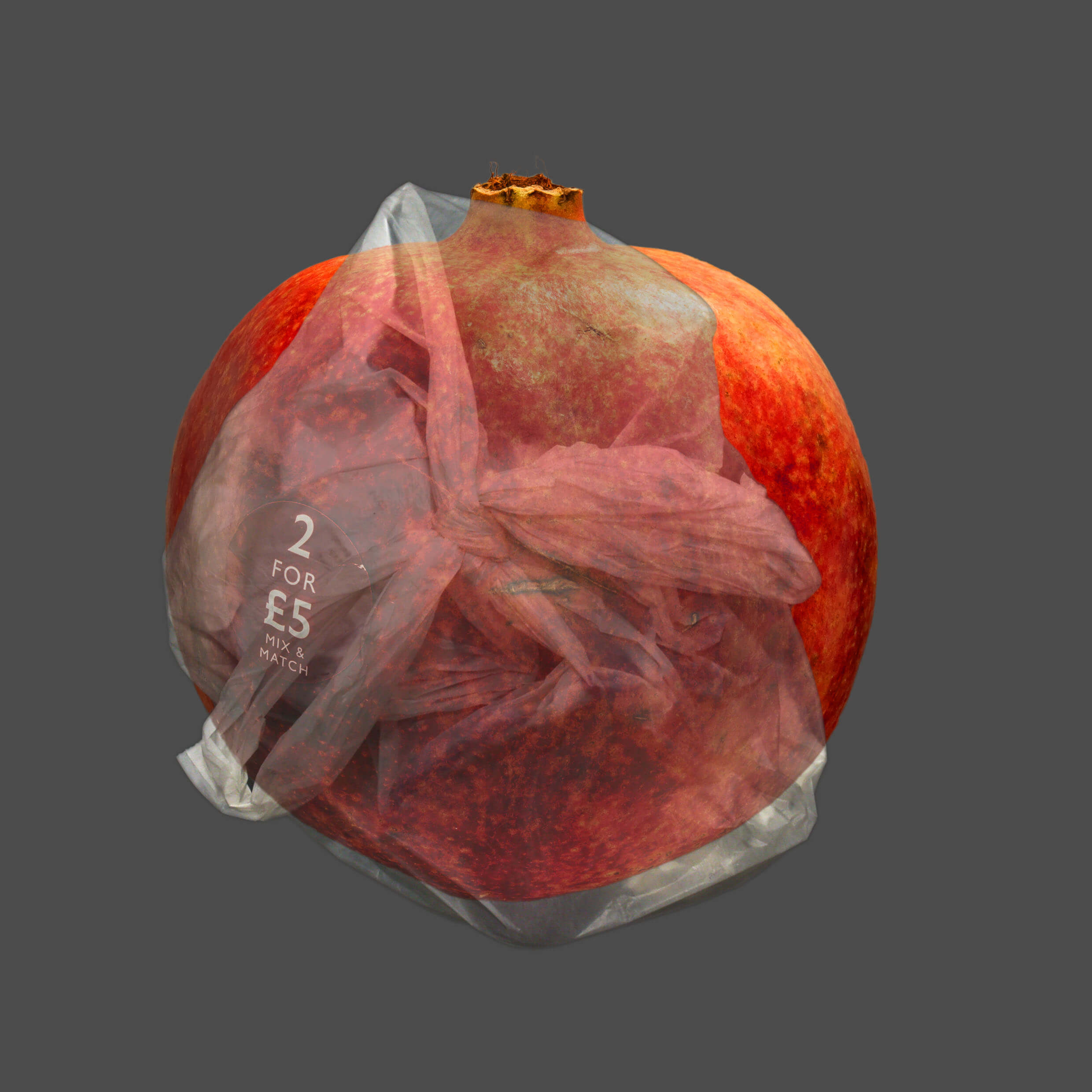
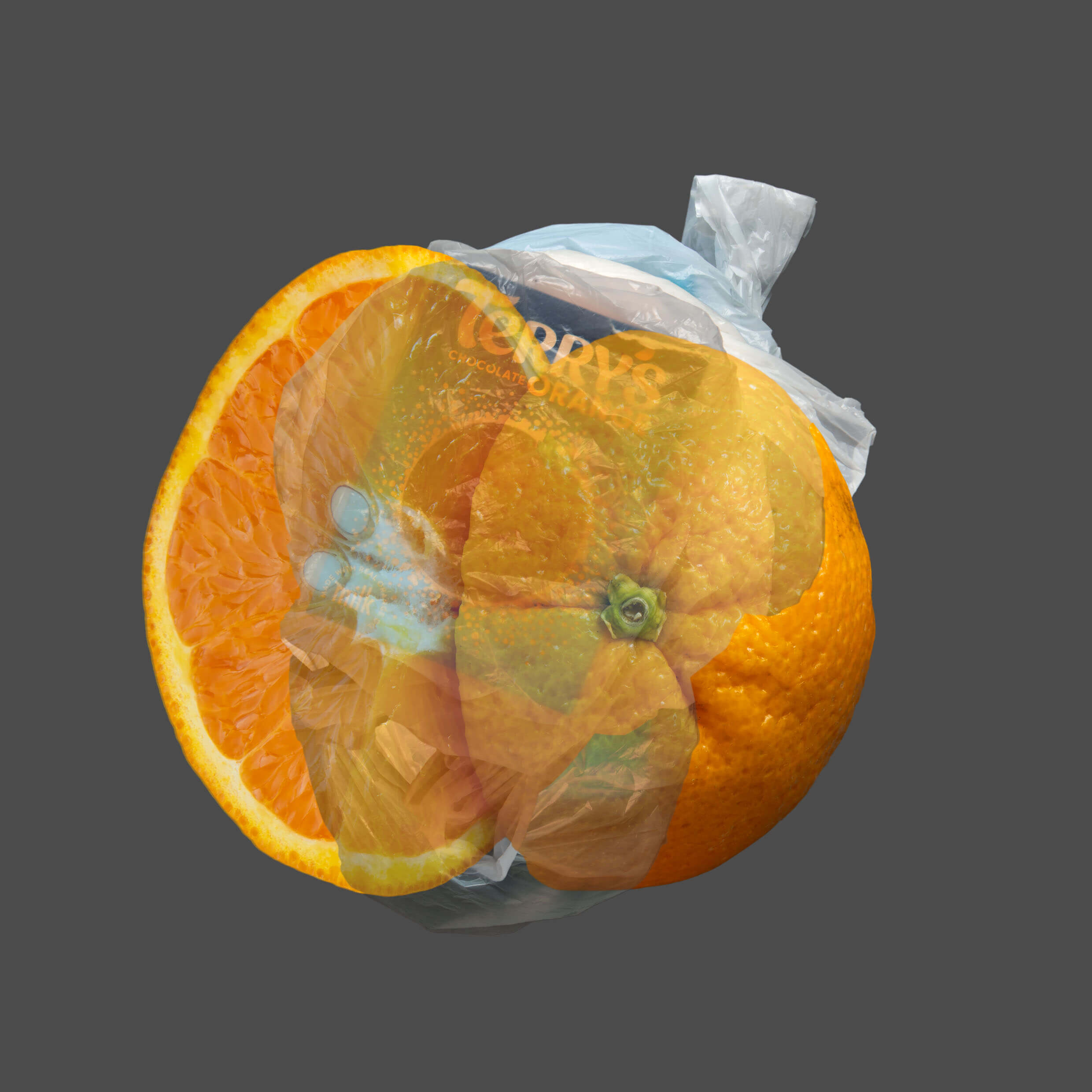
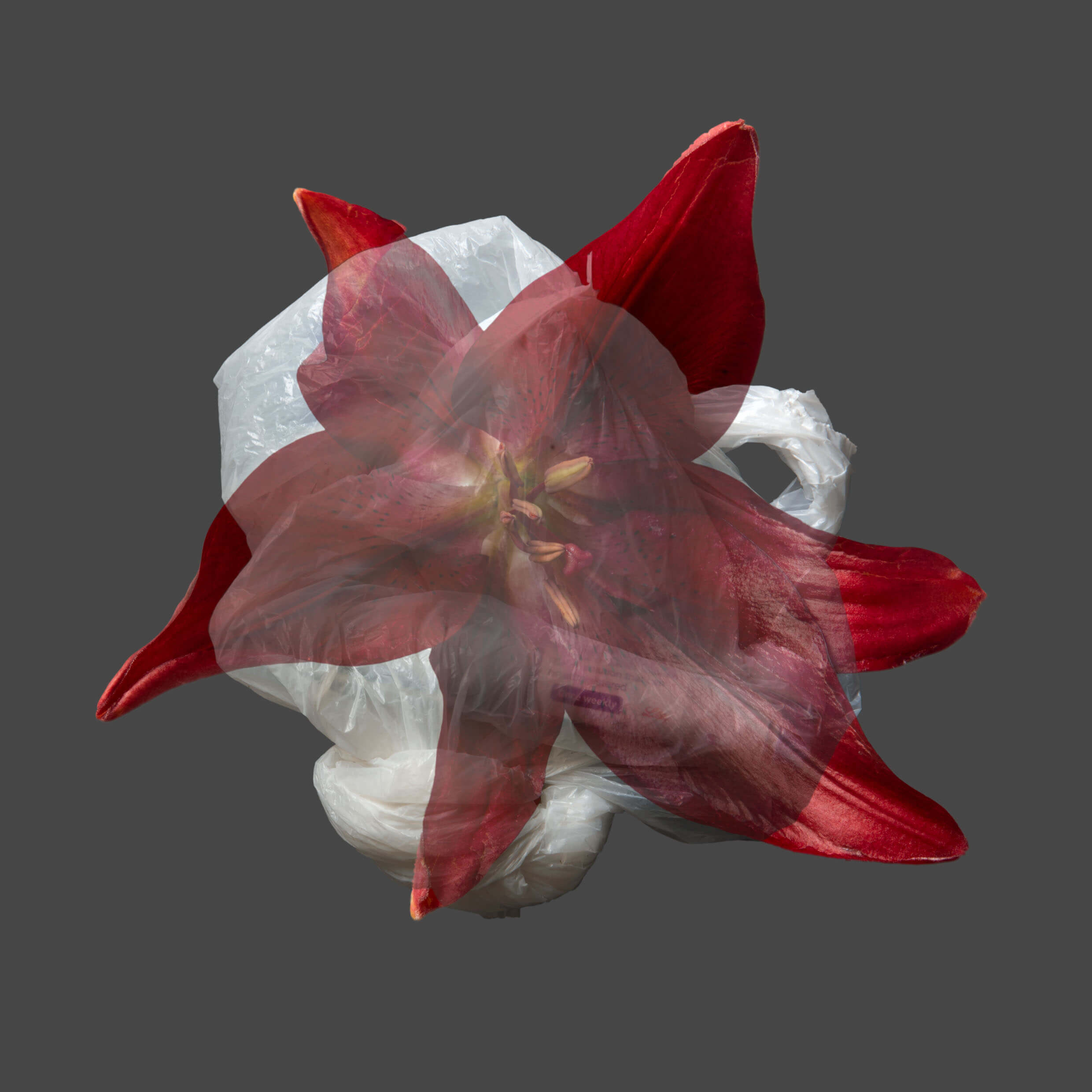
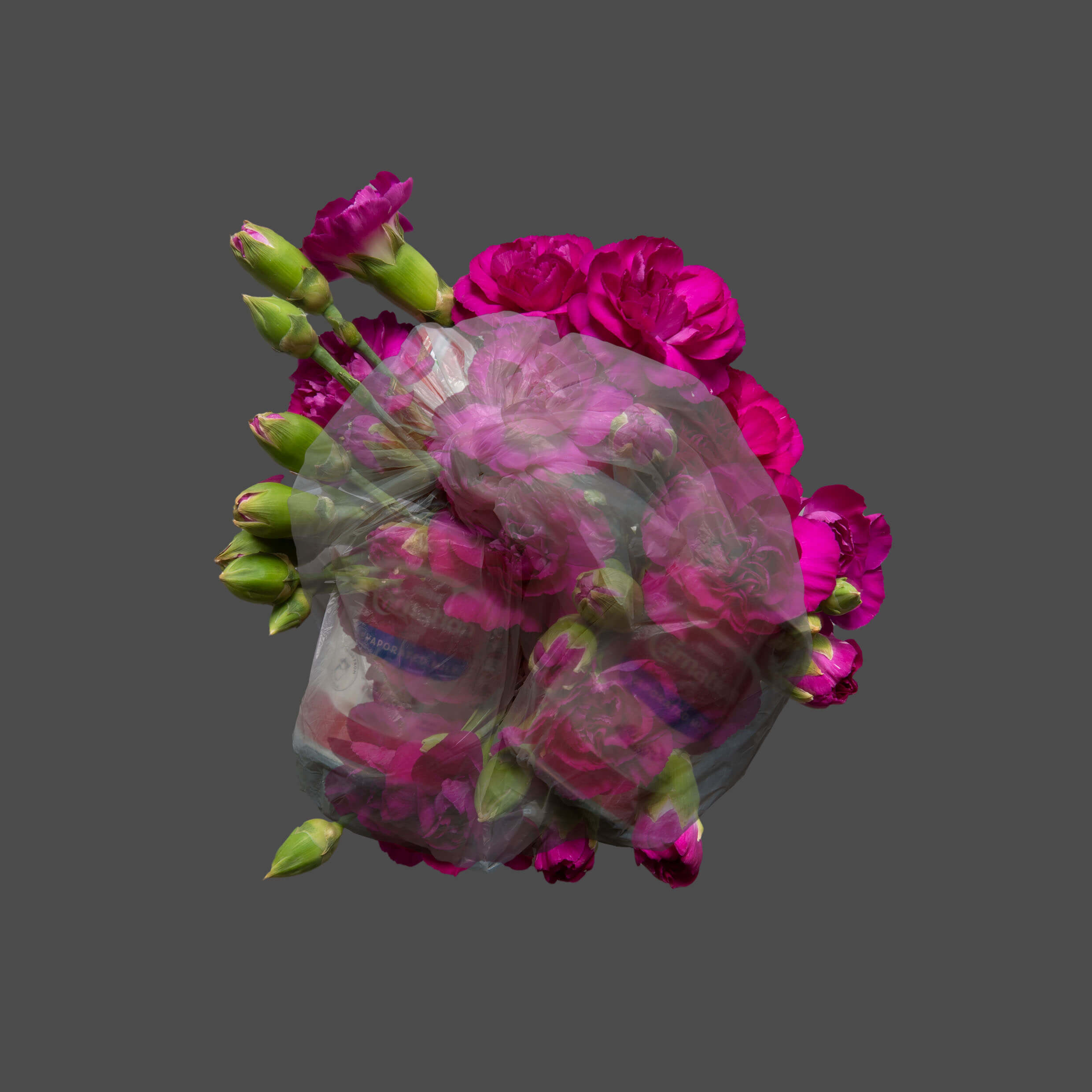
The flowers replicate those associated with the Virgin Mary in the iconographic tradition. Each bin liner holds a discarded consumer product whose branding co-opts the same Marian symbol: a Lilly Mounjaro injection pen inside the lily; a Palmolive body wash bottle ghosting through the palm fronds; a Terry’s Chocolate Orange wrapper fused with sliced fruit; Cadbury’s Roses text folded into rose petals; a supermarket price sticker pressed against pomegranate skin; a Carnation condensed milk tin buried in carnation buds. The formal coincidence of symbol and brand extended the research into feminist ethical territory, raising questions about corporate appropriation of historic feminine symbolism, the plastic waste of mass consumption, and the ecological cost of ageing female bodies managed and medicated by an extractive economy.
The works are formally distinct. The rose is a tight frontal close-up in which liner and Cadbury’s text dissolve into the petal structure almost seamlessly. The orange uses a cross-section, exposing flesh and rind alongside packaging. The pomegranate holds the fruit, liner, and price sticker in separate, visible layers. Each composite refuses gravity and narrative. Matter that has been refused refuses, in turn, to be merely rubbish.
The series functions as non-likeness feminist self-portraiture, grounded in the Feminist Fitting-room methodology developed in Orcutt’s doctoral research (UAL/Falmouth, 2020). It draws on the new materialist thought of Karen Barad and Jane Bennett, and on feminist linguistic scholarship on pejorative terms for older women: old bag, crone, hag. The clustering of these terms around decay, animality, and lost sexuality gives the bin liner its formal and conceptual weight.
Digital photographic collage. Giclée print (Hahnemühle pearl) on aluminium. 30 × 30 cm each.